Every Solution Begins with a Conversation: Bridging Divides in an Age of Grievance
How real conversations disarm grievance peddlers, build bridges, and create the solutions our fractured world desperately needs

Do you see me? Do you hear me? Does what I say matter?
In a time marked by escalating violence and deepening divisions, it is worth pausing to consider the quiet power of human connection. Recently, United States Congresswoman Marjorie Taylor Greene broke ranks with her Republican colleagues by labelling Israel’s actions in Gaza a “genocide” and urging a halt to US funding for the country. She highlighted the starvation crisis in the region and criticised pro-Israel figures within her party, marking a rare shift in her typically hawkish stance.
I never thought I would find myself in agreement with MTG on this issue, given our profound differences on so many fronts. Yet here we are, two voices converging on a call for humanity amid the rubble. This unexpected alignment underscores a fundamental truth: even those we perceive as polar opposites often share more than we realise, especially when it comes to core concerns like justice and the sanctity of life.
This realisation forms the foundation of my conviction that every solution begins with a conversation.
This isn’t just idealism; it’s a documented reality. When we genuinely engage, transformation follows. Yet in the shadow of fascism, corruption, and unrest, we must recognise a dangerous truth: while authentic dialogue heals, those with malicious intent weaponise the very grievances that conversation could address.
When people feel unseen, unheard, and dismissed, they become vulnerable to the politics of grievance. Unaddressed pains fester, and demagogues swoop in, pretending to listen, feigning empathy, all whilst plotting to exploit those wounds for power and profit.
The Predators of Grievance: How Demagogues Weaponise Pain for Profit
The US soybean farmers tell this story with devastating clarity. Tariffs imposed during trade tensions with China slashed their exports, leaving markets in collapse and livelihoods in jeopardy. Meanwhile, the Trump administration has given a $20 billion bailout for Argentina, which suspended soybean export taxes to flood the Chinese market, directly undercutting American producers.
Many of these farmers voted for Trump in rural strongholds, believing he understood their struggles and had their backs. He promised to fight for American farmers, to make trade deals that worked for them. They believed someone finally heard them. But they were duped.
“I’m a soybean farmer who voted for Trump. I’m begging the President to end the trade war,” writes one, warning that “the tariffs on China could put us out of business by 2027.” Another soybean farmer: “I get up one morning, I turn the news on and we gave $20 billion of taxpayer money to Argentina, my competition. And then the Chinese buy $12 or $14 billion worth of soybeans from the Argentinians.”
Chris Gibbs from Ohio laments, “We’re in a hell of a mess here... prices are below the cost of production, so there’s built-in loss.”
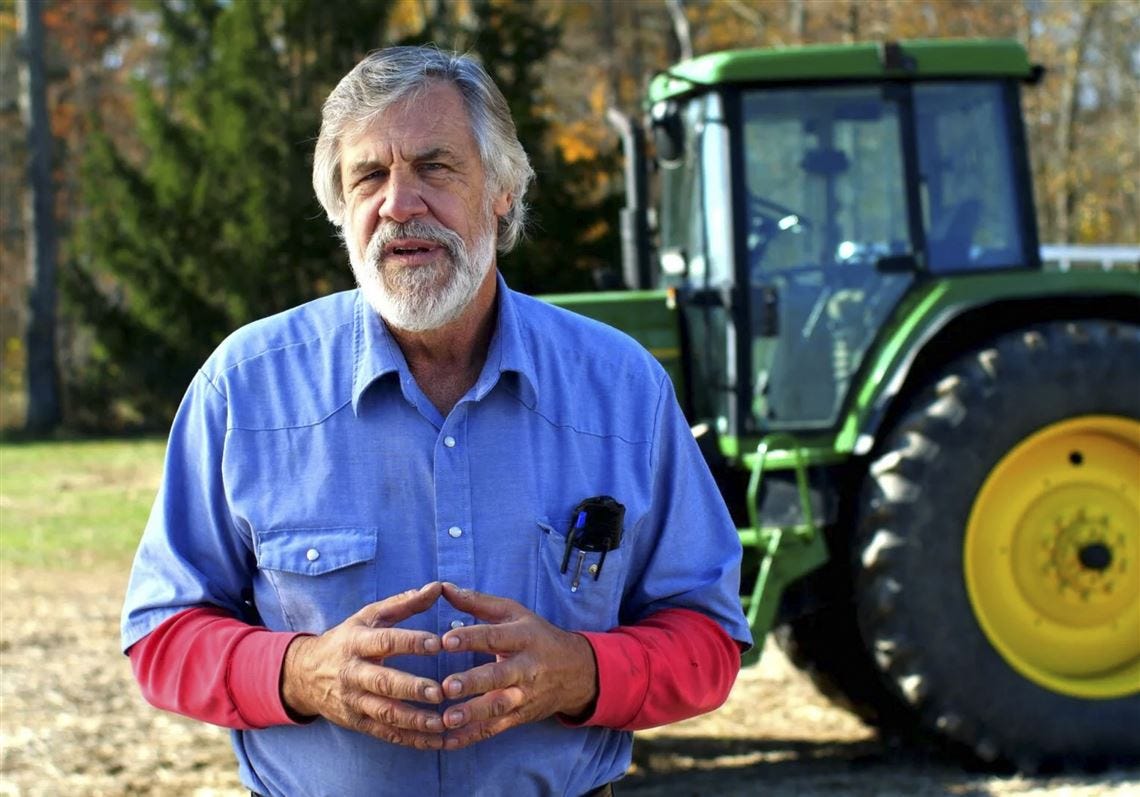
“I trusted him,” one Iowa farmer told reporters. “He said he’d fight for us. Now I’m watching my family’s farm, four generations old, circle the drain.”
Brandon Wipf from South Dakota put it bluntly: “We were the first ones to get hit, and we’re going to be the last ones to recover, if we recover at all.”
These farmers didn’t suddenly develop poor judgement. They were people in pain whose legitimate grievances were heard by someone who never intended to help, only to harvest their votes.
This is the playbook of the grievance peddler: identify people who feel abandoned, mirror their pain just enough to gain trust, promise simple solutions to complex problems, then exploit that trust for personal gain whilst delivering nothing of substance. As H.L. Mencken warned, “For every complex problem there is an answer that is clear, simple, and wrong.” The demagogue offers exactly that: clear, simple, and devastatingly wrong.
We see it everywhere. Politicians who rage about immigration whilst employing undocumented workers. Billionaires who claim to fight for the working class whilst gutting labour protections. Media personalities who stoke cultural resentments whilst profiting from the division they create.
Australians recognise this playbook too. Politicians like Matt Canavan, Pauline Hanson, Andrew Hastie, Barnaby Joyce, and Jacinta Nampijinpa Price have built careers on stoking grievances about immigration, Indigenous rights, and climate action whilst offering simple solutions that never materialise into meaningful help. They claim to speak for “forgotten Australians,” yet their voting records consistently favour corporate interests over the working families they claim to champion. Canavan, for instance, rails against renewable energy whilst voting to protect fossil fuel subsidies that offer little to the regional communities he claims to represent.
The 2023 Voice referendum offers a stark national example. Rather than engaging in genuine dialogue about how Indigenous Australians might have meaningful input into policies affecting their communities, opponents offered simple, fear-based narratives. Nationally, the result was a resounding No. Yet in the Goldstein electorate, something remarkable happened. Leading a non-partisan campaign of 600 volunteers from Labor, Greens, Team Zoe, and beyond, we defied the polls predicting a No outcome. Through a human-to-human ground game built on real conversations, not slogans or fear, Goldstein delivered a Yes result, one of the few electorates to do so. This wasn’t luck. It was proof that genuine dialogue, even on deeply divisive issues, can cut through manipulative narratives when people feel genuinely heard. The national failure, however, left persistent grievances festering, ready for the next opportunist to exploit.
The Argentina Bailout: Rewarding Allies Whilst US Farmers Suffer
The betrayal becomes crystal clear with Argentina. Trump giving a $20 billion bailout not out of humanitarian concern, but because Argentina’s president, Javier Milei, is a personal ally who has praised Trump effusively. Meanwhile, Argentina suspended its soybean export taxes, flooding the Chinese market and directly undercutting the American farmers devastated by Trump’s tariffs.
American soybean farmers, already struggling, now watch as their tax dollars potentially bail out the foreign competitor taking their lost markets. Montana farmer Erik Iversen captures the bitter irony: “They told us to be patient, that these trade deals would work out. We were patient. We planted crops we can’t sell at a profit. And now they want to help the country that’s taking our customers?”
This is grievance exploitation in action: make promises to win trust, deliver policies that harm those very people, then quietly enrich allies whilst the faithful suffer. The farmers’ pain was real. Their need to be heard was legitimate. But the person who claimed to hear them was running an entirely different agenda.
Genuine Conversation as Protection
Here’s the antidote, and it’s simpler than you might think: genuine conversation. Not the nodding head, performative listening of the demagogue, but real dialogue that values people’s experiences and works towards actual solutions.
When communities create spaces for authentic conversation, the con becomes visible.
The difference between someone who truly listens and someone performing empathy becomes stark. Real conversation involves reciprocity, vulnerability, and follow-through. It asks questions and then sits with uncomfortable answers. It doesn’t promise easy fixes or scapegoats. It acknowledges complexity whilst working towards tangible change.
Those soybean farmers offer a cautionary tale and a roadmap forward. If their communities had been having ongoing conversations about trade policy, about agricultural sustainability, about what realistic solutions might look like, the empty promises would have rung hollow. Now, they need to organise, talk amongst themselves and with agricultural economists, trade experts, and their neighbours who didn’t vote for Trump.
They need to ask hard questions:
Who benefits from these policies?
Whose interests are actually being served?
What would genuine support look like?
This is how communities build immunity against future betrayals.
Genuine dialogue builds critical thinking.
It creates networks of trust based on demonstrated care rather than performed concern. It inoculates against manipulation because people learn to recognise the difference between being heard and being handled.
The small act of initiating a genuine dialogue may be our most potent force against hate, but it’s also our best defence against exploitation. When we ensure people feel genuinely seen, heard, and understood through consistent engagement, the opportunists lose their opening.
The Power of Listening: Daryl Davis and the KKK
To illustrate, let us turn to the remarkable story of Daryl Davis, a Black American musician whose deliberate engagements with white supremacists transformed lives. In the 1980s, Davis approached a Ku Klux Klan member at a bar and posed a disarming question: “How can you hate me when you don’t even know me?”
Over the ensuing decades, he sustained these conversations, listening without judgement and sharing his own narrative. The result? More than 200 Klansmen abandoned the group, surrendering their robes and, in some cases, forging lasting friendships with Davis. One former Grand Dragon even attended Davis’s wedding, standing alongside Black guests in a poignant testament to reconciliation.
Davis’s approach did not erase differences; it humanised them, proving that grievances, when aired in safety, lose their grip on isolation. As Davis himself reflects: “When two enemies are talking, they’re not fighting. It’s when the talking ceases that the ground becomes fertile for violence.”

The Science of Connection: The Triple Activation of Our Best Selves
At the core of such encounters lies our shared neurobiology. Humans are hardwired for connection through three neurological imperatives that evolutionary pressures built into our brains as survival mechanisms: curiosity, helpfulness, and fairness.
Curiosity is our drive to explore, question, and learn. It triggers dopamine surges in the brain’s reward system, making discovery feel good. This learning drive powers imagination, invention, and solutions.
Helpfulness is our urge to contribute and collaborate. It releases both oxytocin (the bonding hormone) and dopamine, creating feelings of belonging and connection. Even toddlers under two instinctively help others before they can speak well, showing this isn’t learned behaviour but innate wiring. Cooperation and mutual care gave us a survival advantage.
Fairness is our instinct to protect justice and inclusion. The insula and prefrontal cortex activate when we perceive unfairness, even as observers. We react to injustice as if it’s a physical threat. Children as young as three will reject unfair rewards, even at personal cost, driven by equity over gain. This hardwiring builds social cohesion, justice, and trust.
These aren’t soft skills or personality traits. They are hardwired adaptive systems that evolved to help humans thrive in groups, solve complex problems, and build resilient, trust-based societies. Together, they form a powerful trio that drives personal growth (curiosity), human connection (helpfulness), and social integrity (fairness).
Brain imaging reveals that these qualities activate overlapping neural pathways across diverse individuals, fostering empathy even in disagreement. In an era of echo chambers, tapping this hardwiring allows us to transcend tribalism, addressing grievances before they fuel extremism.
Research from the University of California shows that even brief conversations between strangers with opposing political views can reduce negative stereotyping by up to 10%, with effects lasting months.
Part 1: The Art of the Genuine Conversation (Seeing, Hearing, and Valuing One Another)
The small act of conversation counters fascism by ensuring people feel seen, heard, and understood, forestalling the allure of grievance peddlers. As community initiatives like the Community Independents demonstrate, kitchen-table discussions restore agency, transforming passive resentment into active collaboration.
Another powerful example comes from Colombia, where after decades of civil war, community dialogue circles called “peace laboratories” brought together former guerrillas, victims, and military personnel. These conversations didn’t erase trauma, but they created space for shared humanity. One former FARC combatant described finally understanding the pain he’d caused when a mother shared her story of loss, saying: “I saw her as a person for the first time, not an enemy.”
To cultivate these exchanges, especially with those whose views challenge our own, follow this practical guide, informed by psychological research on bridging divides.
A Starter Handbook for Genuine Conversations:
Begin with Self-Awareness: Reflect on your own triggers. A brief pause activates the prefrontal cortex, tempering emotional reactivity and opening space for empathy.
Create a Neutral Space: Opt for informal settings, free of interruptions. Start with an open invitation, such as: “I’ve been thinking about [topic]. What experiences have shaped your perspective on it?” or “What drew you to that view in the first place?”
Practise Active & Reflective Listening: Echo their words: “It seems like this issue weighs heavily on you because of [key point]. Is that accurate?” This affirms their voice without endorsement. Follow up with: “Can you tell me more about how that felt for you?”
Seek Shared Humanity: Disclose a relatable vulnerability: “I share your concern for stability; it keeps me up at night too.” This uncovers common ground rooted in universal needs. Try: “What worries you most about the future here?”
Pose Open-Ended Questions: Frame enquiries to spark curiosity: “What solutions have you considered?” or “How do you think we could make this better for everyone involved?” Avoid interrogations; aim for mutual exploration.
Express Respectful Disagreement: State your position clearly: “I approach this differently due to [reason], yet I appreciate your insight.” This models fairness.
Conclude with Appreciation: Thank them sincerely: “This exchange has given me much to reflect on.” Follow up to sustain momentum, perhaps with: “Would you be open to chatting again sometime?”
When to Walk Away
Not all interactions merit investment. A minority pursues disruption over dialogue. Grievance peddlers and charlatans, whether they’re Trump promising trade victories whilst betraying farmers or Australian politicians like Canavan and Hanson stoking division for votes, reveal themselves through predictable patterns. Use this checklist to identify and disengage:
They reject your input summarily without enquiry.
The exchange remains one-sided, with no reciprocal questions.
Attacks target character rather than ideas.
They deflect to unrelated provocations.
Vulnerability is absent; only rehearsed rhetoric prevails.
They offer simple solutions to complex problems without acknowledging trade-offs.
Their actions consistently contradict their stated values.
If multiple flags appear, exit politely: “I appreciate the discussion; let’s revisit another time.” Prioritise connections that honour our innate helpfulness.
Part 2: From Dialogue to Action (Tackling Wicked Problems Through Collective Effort)
Genuine conversations are not mere catharsis; they propel us towards solutions for our era’s wicked challenges, from climate instability to integrity deficits, inequality, and shared prosperity. By leveraging our MacGyver-like ingenuity (that resourceful, inventive spirit of cobbling solutions from whatever’s at hand), we can reframe these as collective puzzles rather than adversarial battles.

Research on group dynamics shows that diverse dialogues enhance collective intelligence, yielding innovative outcomes superior to siloed efforts. A study from MIT’s Centre for Collective Intelligence found that groups with diverse perspectives consistently outperform homogeneous groups by 20-30% on complex problem-solving tasks.
Individualism, while valorised, breeds unsustainability; collectivism, aligned with our evolutionary fairness drive, amplifies resilience.
Consider the Transition Towns movement, which began in Totnes, England, in 2006. Through community conversations, residents created local solutions to climate change and resource depletion, establishing food co-ops, renewable energy projects, and skills-sharing networks. The model has now spread to over 50 countries, proving that grassroots dialogue can spark global transformation.
A Starter Handbook for MacGyvering Wicked Problems:
Assemble Your Crew: Gather diverse voices around a shared table (farmers, activists, experts). Start with: “What common fears do we all face here?” Use curiosity to map overlaps.
Inventory the Toolkit: List available resources, no matter how modest (local knowledge, data scraps, volunteer hours). Ask: “What do we already have that could be repurposed?”
Prototype with Helpfulness: Brainstorm low-risk experiments, like a community swap for climate-resilient seeds. Emphasise: “How can we support each other in testing this?”
Test for Fairness: Evaluate ideas through an equity lens: Who benefits? Who might be sidelined? Adjust with: “Does this lift everyone, or just a few?”
Iterate and Adapt: Launch small, learn fast, refine. Celebrate wins: “What worked, and how can we scale it together?”
Scale the Bridge: Link local fixes to bigger levers (petitions, policy briefs). End with: “Who’s ready to carry this forward with us?”
Apply the handbook locally: convene forums on climate adaptation, where affected parties (farmers, urban planners, Indigenous voices) map overlaps in security needs. Nationally, integrity dialogues could expose corruption, as with soybean trade fallout, fostering policies that equitably redistribute gains. Globally, equality advances through cross-border talks, recognising prosperity as interdependent.
In Australia, the Yarra Valley Climate Action Group exemplifies this approach. Through structured community conversations, they’ve brought together dairy farmers concerned about drought, urban residents worried about food security, and environmental scientists. Together, they’ve created regional water management strategies that honour both agricultural livelihoods and ecosystem health. One farmer noted: “I thought greenies wanted to shut us down. Turns out we all want the same thing: a future for our kids.”
We excel when united, our curiosity fuelling invention, helpfulness forging alliances, and fairness ensuring no one is left behind.
Our Next Step
In the end, every solution begins with a conversation: a deliberate choice to listen amid the noise, to see the humanity in the “other,” and to co-create paths forward. This is our quiet revolution against division, one question, one shared story, one bridge at a time.
Do not wait for permission or perfection.
Today, reach out: text that neighbour whose politics puzzle you, host a coffee chat on a local headache, or join a forum amplifying unheard voices. Your words could be the spark that disarms a grievance, ignites an alliance, and mends a fracture.
The world needs your voice in the room. What will you say first?
Start now. The conversation awaits.
You know what to do.
Onward we press
Sue Barrett: every solution begins with a conversation is a reader-supported publication. To receive new posts and support my work, consider becoming a free or paid subscriber.